

A WorldLens example · Technology, energy & everyday life
AI is growing.
Who pays for the power?
The electricity is only part of the bill. The bigger question is who pays for the grid built around it.
A September 2026 story · US House vote, September 16 · Prepared example
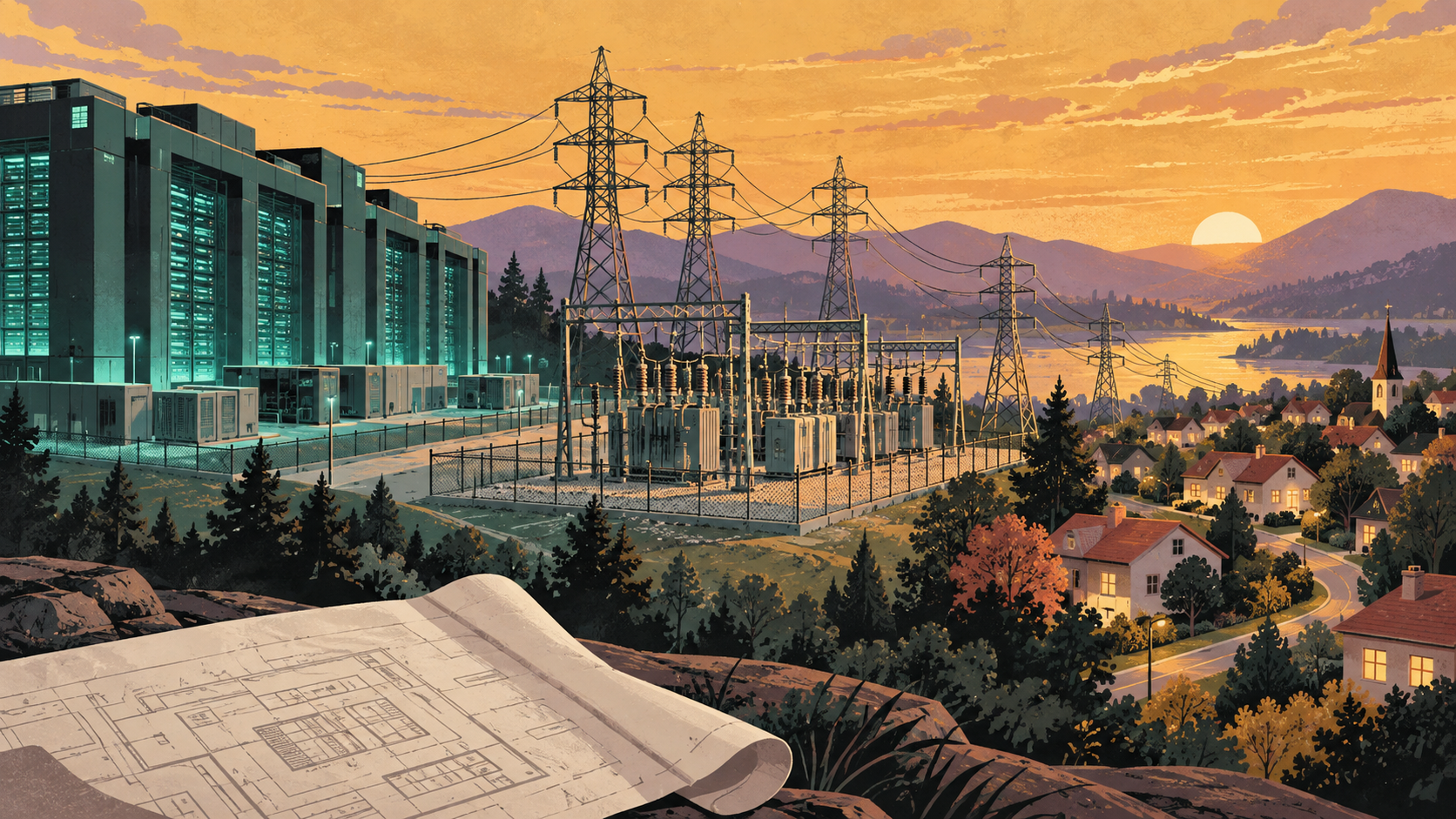
Start here
The briefing
On September 16, 2026, the US House passed the Ratepayer Protection Act, 417–3. The bill addresses the cost of connecting large data centers to the electricity grid. It would require state regulators to consider a standard assigning those costs to the new customer. That distinction matters: considering a protection is not the same as putting it into effect. [1]
What happened?
In plain English
Lawmakers want data centers to pay for the grid upgrades they need, rather than leave other customers with the bill.
This walkthrough examines the House vote and proposed standard. House passage alone does not make a bill law. [1]
Follow the connection
Paying for power and paying for a bigger grid are two different things.
- 1
A new customer needs more capacity.
A large data center can require new generation, transmission lines and local equipment. The electricity meter does not tell the whole infrastructure story. [2]
- 2
The investment creates a commitment.
Equipment may be built before the expected demand arrives. The proposed standard explicitly addresses costs left behind if the customer ends its agreement or stops buying power. [3]
- 3
The rules decide who carries that risk.
The proposal calls for upfront financial assurances and recovery of the extra upgrade costs from the large customer. Whether protections take effect depends on the decisions that follow. [3]
This is a cost-allocation question. It does not establish that a particular household’s bill has increased because of AI.
What makes the difference?
What gets adopted
A requirement to consider a standard leaves a further decision to regulators. Read the decision, not just the announcement. [3]
What the agreement covers
Look for upgrade costs, financial guarantees and an exit clause. A promise to pay for electricity may not answer all three. [3]
Whether the demand arrives
Our question for a real project: if it is delayed or cancelled, who remains responsible for infrastructure already commissioned?
Make it relevant
You can share the grid without sharing the deal.
A household and a data center may use the same network, but have very different agreements with the utility. To understand your exposure, we would need your utility’s approved rates, the project’s agreement and the regulator’s cost-allocation decision.
Those local documents are not included in this example, so we cannot put a dollar figure on the effect on your bill.
Go deeper
Separate the vote, the infrastructure problem and the proposed protections.
- 01 · What passed the HouseSeptember 16 vote announcement ↗
Records the 417–3 vote. A member’s statement establishes the event, not the effect on household bills.
- 02 · Why upgrades matterHouse Energy and Commerce background ↗
June 18, 2026. Describes the infrastructure issue and legislative intent. It is the sponsors’ explanation, not an independent impact study.
- 03 · What the standard would doProposed cost protections ↗
September 16, 2026. Details the 100-megawatt eligibility threshold, upgrade costs, exit costs and financial assurances.
What could change the picture?
Next, check the bill’s progress and actual utility decisions. A binding guarantee would tell us more than a public pledge. A cancelled project would make its exit terms especially important.
The useful question is not just how much power AI needs. It is who is committed to paying when the plans change.
A sourced walkthrough of a September 2026 event. The questions about individual projects are WorldLens analysis, not claims that those outcomes have occurred.
From a headline to an explanation you can inspect.